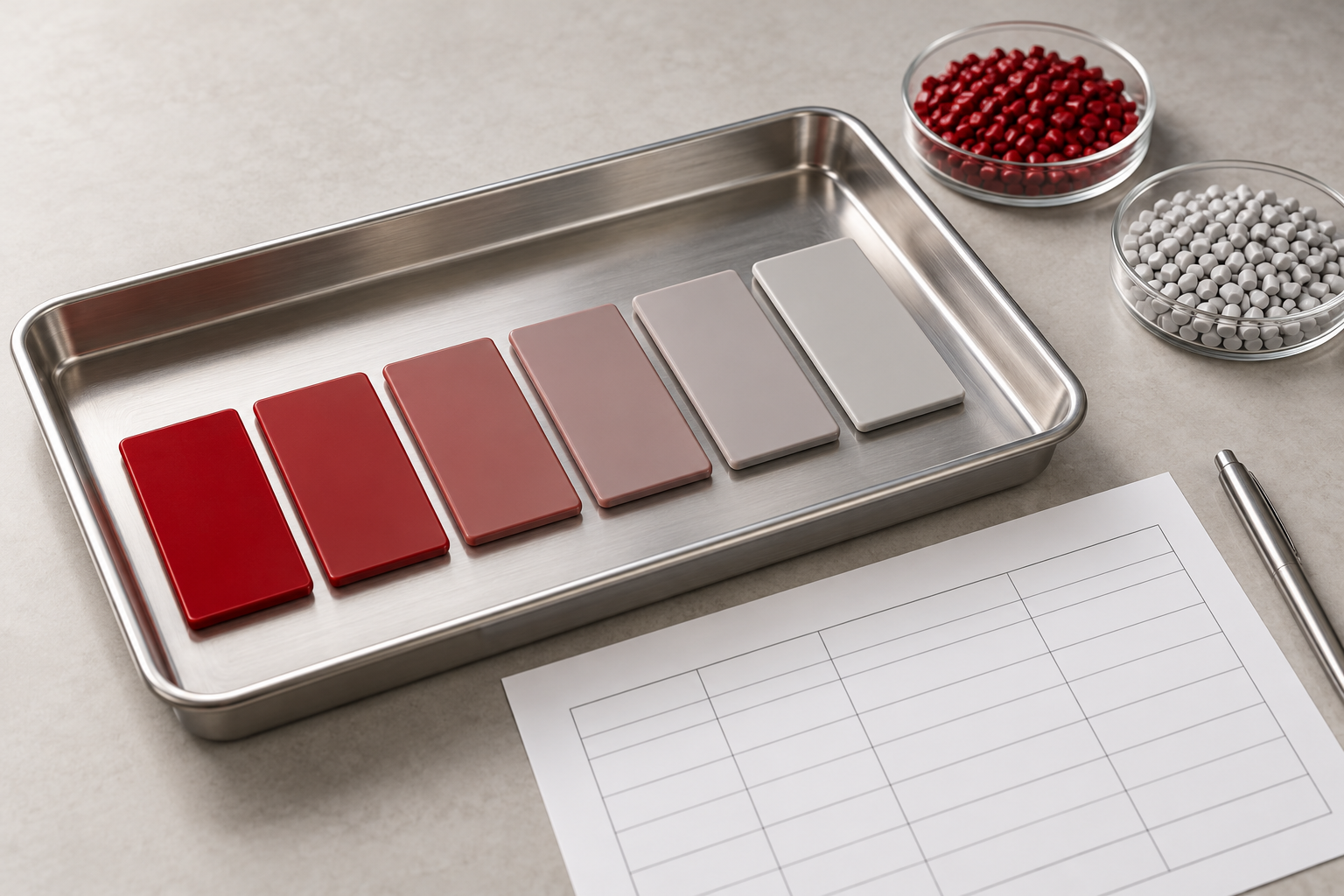
A colour-change trial needs an agreed starting condition, a traceable sample sequence and a defined acceptance decision. A clean-looking final sample alone does not tell a buyer how the tool moved from the previous colour to the next. This is a suggested procurement record, not a purge recipe or a promise of a particular changeover time.
Define the transition
Identify the old and new resin grades, colourant systems and permitted regrind condition. Name the relevant feed system, machine, hot runner and mould revision. Record whether the trial starts after a production run, a shutdown or a previously cleaned system. Those are different starting conditions. Ask the equipment, resin and purge-compound suppliers to confirm the applicable method; do not transfer settings between unrelated systems.
Define what the timer and quantity include
Agree the events that start and finish the comparison. State whether the record includes feed-system cleaning, barrel purging, hot-runner purging, stopped time and sample inspection. Keep actual material quantities separate from estimated quantities. A controller's reported cycle count is one input to the record, not automatic proof of acceptable parts. Husky describes a specific controller and purge-compound workflow using saved mould settings and a cycle-count input; its capabilities and published results must not be assumed for another installation.
Preserve the sample sequence
Identify each cavity or agreed outlet and retain samples at the agreed points in the transition. Record when samples were collected and what changed in between. Assess the same marked areas under the agreed inspection conditions. Specify the appearance criterion, reference sample and any required functional checks before the trial. Do not invent a universal number of acceptable shots, colour tolerance or sampling interval.
Separate appearance from a repeatable process
Record the first sample that meets the agreed criterion and the subsequent checks needed for the agreed acceptance decision. Note any reappearance of the previous colour or contamination, without assuming its location or cause. If material, temperature programme or purge method changed, preserve that change in the comparison. One successful transition does not establish performance for every colour pair or resin.
Close the procurement decision
The record should identify the transition, starting condition, approved procedure reference, measured time and material scope, sample sequence, acceptance result and unresolved conditions. Decide what must be rechecked at the receiving plant. Keep estimated savings and supplier demonstrations separate from the buyer's accepted trial evidence.
Discuss your project