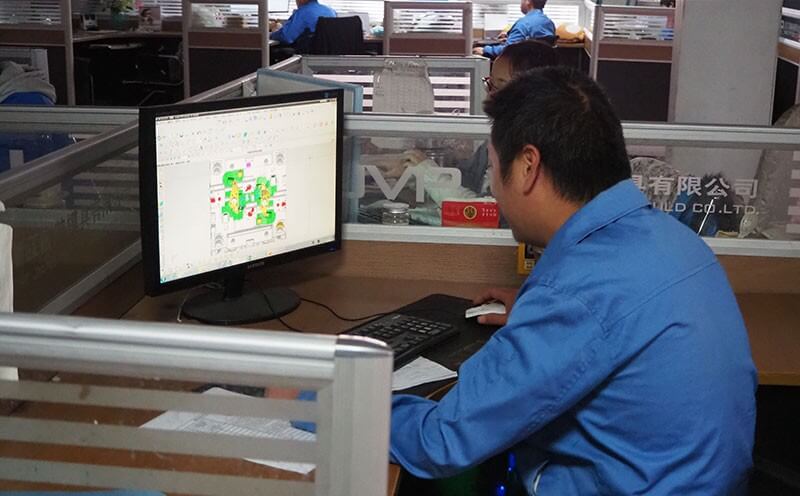
In mold inquiries, a common situation arises: for the same product, different suppliers quote very different prices. The reason is often not processing capability, but incomplete inquiry materials—some only send a 3D drawing, others explain appearance requirements and assembly relationships verbally, and the mold factory can only estimate based on its own assumptions, so quotations naturally do not match. Organizing the materials clearly not only makes quotations closer to reality but also reduces subsequent mold modifications and communication disagreements.
1. Drawing Versions and Data Completeness
First confirm which version of the drawing is sent to the mold factory. The same product often has multiple versions during development. If the two parties refer to different versions, subsequent discussions on structure, parting surface, and gate location will be misaligned. It is recommended to state the version number or date in the inquiry email and clarify whether this version is the final one.
Regarding data, 3D data is usually needed for parting and cavity layout, and 2D drawings for marking dimensional tolerances, key mating dimensions, and appearance benchmarks. If there is only 3D and no 2D, both parties need to supplement and confirm tolerances and acceptance benchmarks, and model precision cannot be treated as machining tolerance. Also clarify whether the product is a completely new development, a copy of an existing mold, or a mold modification: for modification, the original mold condition or original drawings need to be provided; for copying, confirm whether the original mold has a physical object and whether it can be referenced.
In addition, clearly explain the product's use and operating environment. For example, whether it involves assembly, bears pressure, contacts chemicals, or is used outdoors—these affect material and structural judgments and cannot be seen from just an outline drawing.
2. Resin Grades and Appearance Requirements
The material part is the most prone to vagueness. Writing only "ABS" or "PP" is usually not enough; it is best to give a specific grade or at least the supplier and grade range. Within the same type of resin, different grades differ significantly in flowability, shrinkage, mechanical properties, and surface effect, directly affecting gate location, cooling design, and mold steel selection. If the grade has not yet been determined, the candidate range can be stated, and it should be noted which party will make the final confirmation.
Appearance requirements must be specific to surfaces. Which surfaces are Class A appearance surfaces, which surfaces allow slight flow marks or ejector pin marks, and whether grain, texture etching, sandblasting, or high gloss is needed should all be specified. Appearance standards should preferably be accompanied by physical samples or photos; using only text to describe "surface should be good" cannot serve as an acceptance basis.
Multi-color requirements also need to be clarified here. Two-color or three-color injection molding does not necessarily mean different resins must be used; color differences can also come from masterbatch or color matching of the same material. If the product is made of different colors joined together but the same material, the choice of mold structure and molding method will be more flexible. When inquiring, the color realization method should be explained, rather than defaulting to treating it as multiple materials.
If the product involves bonding or overmolding of different materials, do not assume any two plastics can bond. The bonding effect depends on the specific grade combination and process and must be verified through actual testing. At the inquiry stage, the requirement can be raised, but it should not be treated as an established solution before verification.
3. Assembly Relationships and Structural Constraints
Whether the product needs to be assembled with other parts is an important input for mold design. Assembly relationships include mating dimensions, positioning structures, snaps, screw bosses, inserts, etc. If the product has a mating part, it is best to provide the key dimensions of the mating part or an assembly sketch so the mold factory understands which side the tolerance should be tightened on.
Also clarify whether the product has metal inserts, whether in-mold assembly is required, and whether there are undercut structures that require sliders or lifters to mold. These all affect mold structure and quotation. If the product's appearance surface does not allow gate points or ejector pin marks, this should also be stated in advance, because it restricts the choice of gate and ejection schemes.
4. Production Volume, Delivery, and Acceptance Criteria
Production volume information determines the number of cavities and steel selection for the mold. When inquiring, state the expected total production volume, batch size, and delivery rhythm—whether it is long-term continuous production or small-batch trial production. More cavities are not always better; the decision should be made comprehensively based on production volume and unit cost.
For the acceptance part, it is recommended to agree in advance: after mold trial, by what standard the samples are confirmed, whether dimensions are judged according to 2D drawings or assembly results, which sample or photo is used to judge appearance, and how mold life and replacement of wear parts are defined. Writing these contents into the inquiry materials will make subsequent acceptance much smoother.
One final reminder: the materials do not have to be perfectly organized all at once, but it is necessary to truthfully explain which items are confirmed and which are still being evaluated. The mold factory can distinguish "confirmed" from "pending," and only then are the assumptions behind the quotation transparent.
If you are preparing a mold inquiry, you can organize the drawing version, material grade, appearance requirements, assembly relationships, and production volume information and send them to us. We will communicate and confirm based on the actual materials.
Discuss your project