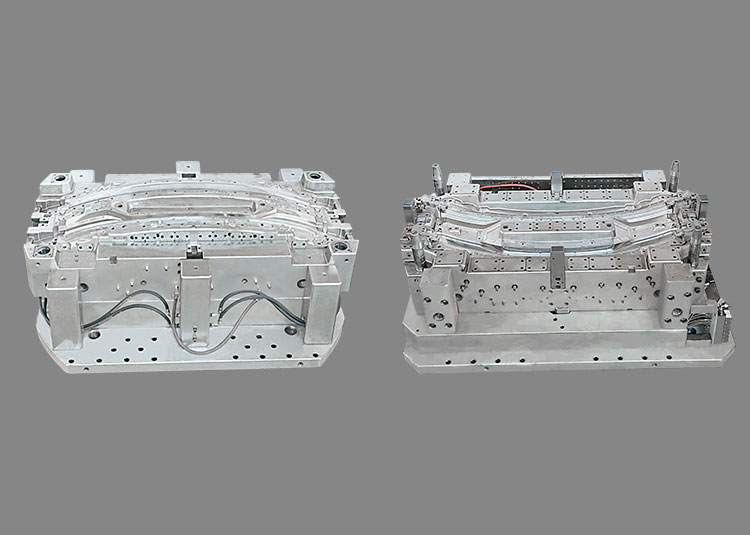
Two-shot and three-shot injection molding are often discussed as the same type of process, but the questions they must answer during the selection stage are not the same. Two-shot typically completes a combination of two colors or two materials within a single molding cycle; three-shot adds another color region or layer of functional material on top of that. The real starting point for selection is not the machine, but the product itself: which regions need different colors, which regions need different functions, whether the two regions need to bond, or whether they can rely on structural interlocking.
First Distinguish Color Regions from Functional Regions
Color regions and functional regions are often discussed interchangeably. Some products simply have two colors in appearance, and the material can be the same grade, distinguished only by masterbatch or color powder; other products require one material to provide rigidity and another to provide soft touch, sealing, or chemical resistance. When submitting requirements to a supplier, it is recommended to draw the color, material, thickness, and boundary of each region on the same product drawing, rather than describing them verbally.
Boundary treatment is the most easily underestimated part of selection. Whether the two regions meet in a flat plane, meet at a step, or wrap around each other directly affects the mold's parting, sealing, and transfer methods. If the boundary is only a decorative line, tolerances can be relatively loose; if the boundary also performs a sealing or assembly function, the mating surface and allowable flash direction need to be marked on the drawing.
Material Compatibility Must Be Traced to Specific Grades
Two-shot and three-shot do not necessarily mean different resins must be used. Two-color effects can also be achieved between similar materials, for example, the same base resin in two colors, or one body material and one with added functional additives. What truly requires caution is the bonding between different resins: whether they can bond depends on the specific grades, polarity, crystallization behavior, and molding window, not on the broad category name.
Therefore, material selection cannot stop at a level like "PP plus TPE." The supplier needs to know the specific grade, supplier, and color requirements for each of the two regions in order to judge whether they are suitable for overmolding or mold indexing. Bond strength, temperature cycling, and aging resistance should all be verified through sampling and testing; it is not recommended to substitute general empirical values for actual testing. If the two materials are inherently incompatible, mechanical interlocking, snap fits, or secondary assembly can be considered, rather than forcing them to bond inside the mold.
What Three-Shot Adds Compared to Two-Shot Is More Than Just a Third Material
Three-shot injection molding mold solutions usually need to consider more transfer sequences, cavity allocation, and runner layout. Adding injection components usually introduces additional interfaces, stations, and thermal history, which need to be evaluated based on the specific process; the mold's parting surfaces, rotating or sliding mechanisms, and ejection methods will all become more complex. During early evaluation, product engineers can first judge with a simple question: does the third color or material really have to be completed within the same cycle? If it can be separated into a subsequent process, the overall solution is often easier to control.
At the same time, note that three-shot does not automatically equal a higher appearance grade. More colors mean more boundaries, and the probability of color mixing, flash, or undesirable weld line positions also increases. For procurement, this means that during the sampling stage, appearance standards and acceptable boundary conditions need to be confirmed more clearly, rather than waiting until mass production to discuss them.
Mold Solutions and Evaluation Sequence
An actionable evaluation sequence is: first confirm the function and color requirements of each region, then confirm whether materials can be the same type or need to be different types, then determine whether the regions are bonded, interlocked, or separated, and only finally discuss the mold implementation methods of mold indexing, core-back tooling, overmolding, or post-assembly. This sequence can avoid investing effort too early in machine selection.
When submitting materials, it is recommended to provide the product 3D, 2D drawings, material grade and color for each region, annual usage range, appearance requirements, and assembly relationships at one time. You are welcome to submit materials through the project consultation entry on the website and discuss specific solutions with us.
Discuss your project